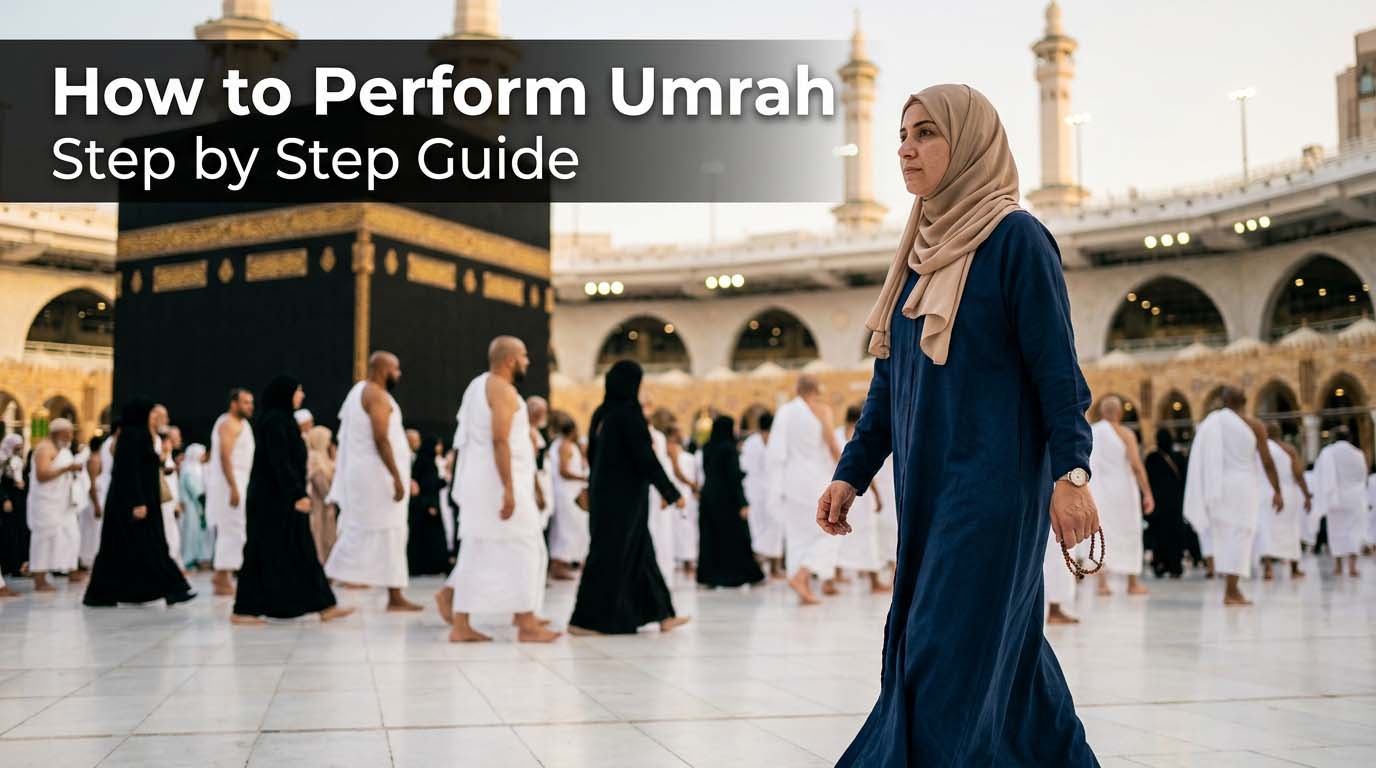

One question I am asked again and again, especially by UK pilgrims preparing for their first journey, is: Can I perform Umrah on behalf of someone else?
Most of the time, there is a deeply personal reason behind this question. It may be a father who passed away before he ever had the chance to go, a mother whose health no longer allows her to travel, or a close relative who saved for years but never made it to Makkah.
If you are hoping to perform Umrah on behalf of someone else, the good news is that this is a well established practice in Islamic tradition. However, it is not as simple as just making an intention. There are specific conditions, a correct way to form the niyyah, and a few common misunderstandings that many people are not aware of.
In this guide, I will explain what proxy Umrah is, who it is allowed for, how to perform it correctly, and what to avoid, using clear and simple language, just as I would when advising a pilgrim before their flight to the Holy Lands.
Understanding Umrah on Behalf of Someone Else
To perform Umrah on behalf of someone else means you are carrying out the acts of Umrah (ihram, tawaf, sa‘i, and ending the ihram) while intending that the reward and fulfilment of that Umrah goes to another person.
You’ll hear a few terms used for this:
- Performing Umrah for someone else
- Proxy Umrah
- Umrah on behalf of deceased
- Umrah khidmah (often used for service arrangements where someone is assisted in performing Umrah; in some communities it’s also used loosely around proxy services)
Living vs deceased: what’s the difference?
Scholars discuss proxy worship in a careful way. In general:
- For someone who has passed away: performing Umrah for them is widely accepted.
- For someone living: it may be allowed if they are genuinely unable to perform Umrah themselves (for example, a permanent illness or extreme old age). If they could do it themselves, most guidance discourages proxy Umrah for them.
Because rulings can vary by madhhab and individual circumstances, it’s wise to speak to a trusted scholar—especially for cases involving a living person.
Who Can Perform Umrah on Behalf of Someone Else?
This is where many people get caught out. They assume they can do multiple Umrahs for lots of relatives in one trip without conditions. The reality is more structured.
1) You should perform Umrah for yourself first
A common rule mentioned in classical discussions is that if you haven’t performed your own obligatory Umrah (or your own first Umrah), you should start with yourself. Then, if you have time and ability, you can perform another Umrah on behalf of someone else.
Practical example:
You go for 10 nights. Do your own Umrah soon after arrival. Later in the trip, you go to a miqat point and enter ihram again for proxy Umrah for your father.
2) Proxy Umrah is most clear for the deceased
Umrah on behalf of deceased relatives is one of the most common reasons people do this. Many pilgrims feel it’s a gift of reward and a way of honouring parents and family members.
3) Proxy Umrah for a living person requires genuine inability
If someone is living and physically able to travel and perform Umrah, then proxy Umrah is generally not what you choose first. But if they are permanently unable, proxy Umrah may be permitted.
If you’re unsure, ask a scholar with the details:
- Is the illness temporary or permanent?
- Can the person travel with assistance?
- Do they have the financial means?
4) Age and gender considerations
- Gender: A man can perform Umrah on behalf of a woman and vice versa.
- Children: A child who can understand intention and perform the actions correctly may be able to do Umrah, but proxy Umrah by a child is a question best put to a scholar for your specific case. Many families prefer an adult to do proxy Umrah to avoid mistakes.
Steps to Perform Proxy Umrah (How to perform Umrah for others)
This is the part people want most: a simple, practical method. Here is how performing Umrah for someone else is usually done.
Step 1: Be clear about who the Umrah is for
Choose one person for that Umrah. Write it down if you’re worried you’ll get mixed up, especially if you plan more than one.
Example:
- “This Umrah is for my late mother, Fatimah.”
- “This Umrah is for my father who is alive but permanently unable to travel.”
Step 2: Enter ihram from a valid miqat (or from where you are required)
If you’re arriving from abroad, you will enter ihram from the miqat as per your route (often announced on the plane).
If you are already in Makkah and want to do another Umrah for someone else, you’ll need to go outside the Haram boundary to enter ihram again (many people go to Masjid Aisha at Tan‘im, but follow local guidance on transport and timing).
Step 3: Make the intention (niyyah) for proxy Umrah
This is the key difference in proxy Umrah: the intention is for the other person.
Keep it simple and sincere. The wording does not need to be complicated. You are intending that this Umrah is on behalf of “so-and-so.”
Tip from experience: People sometimes overthink the Arabic phrases. Niyyah is in the heart. If you want to say it out loud to help yourself focus, that’s fine, but don’t treat a specific wording as if it’s the only valid one.
Step 4: Proceed to Masjid al-Haram and perform Tawaf
- Perform tawaf as you normally would: seven circuits around the Ka‘bah.
- Maintain the manners of tawaf: avoid pushing, be patient, and remember you’re in worship, not in a race.
Step 5: Pray two rak‘ahs (where possible)
Pray behind Maqam Ibrahim if you can without causing difficulty to others; otherwise pray anywhere in the masjid.
Step 6: Perform Sa‘i between Safa and Marwah
Complete seven trips as required.
Step 7: End the ihram properly
- Men usually trim or shave hair (shaving is often considered more complete, but do what is appropriate for your situation and follow sound guidance).
- Women trim a small amount from the end of their hair.
Now the Umrah is complete for the person you intended.
Practical tips when doing Umrah for parents / relatives
If you’re doing Umrah for parents / relatives, consider these:
- Choose quieter times for tawaf (late night or after Fajr can be easier, depending on season).
- Make du‘a for the person throughout, not just at the end.
- If the person is deceased, include du‘a for forgiveness and mercy, not only “reward”.
Mistakes to Avoid (very common)
I’ve seen these mistakes repeatedly, and they’re avoidable.
1) Doing proxy Umrah without doing your own first
Many pilgrims arrive and immediately intend the Umrah for someone else. If you’ve never performed Umrah before, start with yourself.
2) Mixing intentions mid-Umrah
Some people start tawaf for one person, then halfway through think, “Let me share it between my parents.” Keep one Umrah for one person. If you want to do another, do another separately.
3) Paying for “proxy Umrah services” without checking credibility
You’ll see online offers claiming “Proxy Umrah done for you” with photos and certificates. This area is sensitive. At minimum, if you are considering any paid arrangement, check:
- Who is the person actually doing it?
- Are they trustworthy and known locally?
- Will they provide details of miqat, timing, and proof that sounds genuine?
- Are they exploiting something sacred?
If you can do it yourself, that’s usually the best route.
4) Ignoring the basics of ihram rules
Even in proxy Umrah, ihram rules still apply: clothing rules, avoiding prohibited actions, and maintaining behaviour. Many people focus on the “proxy” part and forget the foundations.
5) Overloading the trip with too many Umrahs
Some pilgrims try to do Umrah for multiple relatives every other day. They end up exhausted, short-tempered, and missing prayers in congregation due to sleep. Better to do fewer Umrahs properly than many Umrahs poorly.
Benefits of Performing Umrah on Behalf of Others
When it’s done correctly, to perform Umrah on behalf of someone else can be meaningful in several ways:
Spiritual benefit
- Hope of reward reaching the person (especially the deceased)
- A strong reminder of family ties, gratitude, and accountability
Emotional benefit
- Many people feel relief that they did something real for a parent who couldn’t go
- It can help families heal after a loss, especially when done with sincere du‘a
Community and family benefit
- Encourages families to learn the rites properly
- Keeps the intention focused on worship, not just travel
FAQ
Can I perform Umrah for someone living?
It may be allowed if the person is permanently unable to perform Umrah themselves. If they are able, proxy Umrah is generally discouraged. Speak to a trusted scholar with the person’s circumstances.
Can I perform Umrah for my parents?
Yes, many pilgrims perform Umrah for parents—especially Umrah on behalf of deceased parents. If a parent is living, it depends on whether they are genuinely unable to do it themselves.
Is intention required differently for proxy Umrah?
Yes. The key is that your niyyah is for the other person from the start of ihram. Keep it clear: one Umrah for one person.
Can a child perform Umrah for someone else?
A child may be able to perform Umrah if they understand and can do the rites correctly, but proxy Umrah by a child is a matter to confirm with a scholar. Many families choose an adult to avoid mistakes.
Can I do multiple proxy Umrahs in one trip?
Yes, if you have the ability and time, and you perform each Umrah separately—entering ihram correctly each time and keeping the intention clear.
What is Umrah khidmah, and is it the same as proxy Umrah?
Umrah khidmah often refers to support and service (helping pilgrims with logistics, guidance, transport, or assistance). People sometimes use it casually to describe proxy arrangements too, but they aren’t always the same thing.
Conclusion
If you want to perform Umrah on behalf of someone else, treat it with the same care you’d give your own Umrah: correct intention, correct method, and sincerity. Do your own Umrah first if you haven’t already, keep each proxy Umrah dedicated to one person, and don’t rush to do too many in a short trip.
If you’re planning Umrah and you’re unsure about proxy rules for a living relative, speak to a scholar you trust, then plan your itinerary around that advice.
If you’d like help planning dates, miqat points, or a realistic schedule that fits your family—explore related Umrah guides on your site or speak with an experienced Umrah advisor before you book.